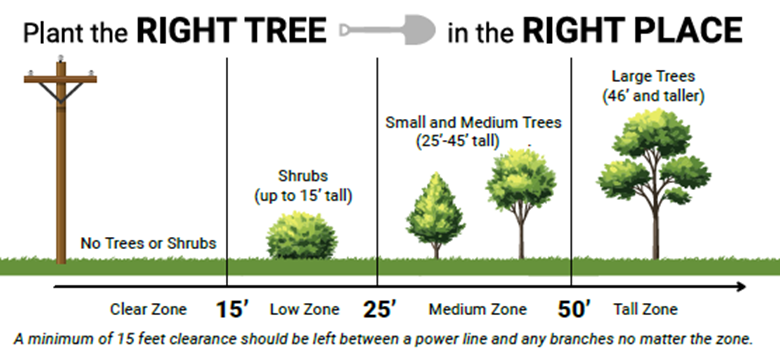
Planting trees and landscaping are common projects during the spring and fall. As we spend more time outdoors planning improvements to our property, it is important to consider how new trees and plants may impact the nearby utility infrastructure.
Trees are valuable for many reasons—beauty, shade, wildlife habitat, erosion control, and environmental benefits. However, planting the right tree in the right place is essential to ensure long-term safety, reliability, and reduced maintenance.
Before planting, always look up and check for overhead power lines. Trees planted too close to electrical lines can become hazards as they grow, leading to safety risks, outages, and the need for trim-ming or removal. A tree that is only a few feet tall today could reach 40–50 feet in maturity, potentially interfering with power lines and affecting service for you and your neighbors.
Understanding the mature height and spread of any tree or plant—and choosing an appropriate location—helps protect your investment and ensures it can grow safely for years to come. No one wants to lose a healthy, established tree because it became a risk to electric reliability.